

Founder of Travel Camera Truth and Big T Honest Reviews, sharing honest, practical camera and travel-gear guidance based on real-world use.
When choosing between a compact camera and a smartphone for travel, I do not believe there is one answer that works for everyone. Both can take excellent travel photos, but they serve different purposes.
For my own trips, I bring both my iPhone and my Sony RX100 VII. I use my iPhone for general travel photos, cover images, and thumbnails. I use the Sony when I need more reach, especially for distant subjects and wildlife close-ups.
I carry more equipment than most travelers because I create reviews, photos, and videos. My setup may also include a second iPhone, a Canon EOS R7, a Nikon COOLPIX P1100, a GoPro HERO13, an Insta360 Ace Pro 2, and Insta360 X5 and X6 cameras. Most travelers do not need that much equipment. I bring different cameras because each one has a particular job.
Quick Answer
A smartphone is usually the best choice for travelers who want convenience, good general photos, easy editing, and fast sharing. A compact camera is worth bringing when you want optical zoom, additional camera controls, or a separate device dedicated to photography. I bring both because my iPhone handles everyday travel images while my Sony RX100 VII gives me more reach for distance and wildlife.
Key Takeaways
- I use my iPhone for general travel photos, cover images, and thumbnails.
- I use my Sony RX100 VII for distant subjects and wildlife close-ups.
- I carry a second iPhone as a backup because a phone can overheat or lose power.
- Each camera in my travel setup has a specific purpose.
- Most travelers do not need to carry as much equipment as I do.
- The best choice depends on what you photograph and how much equipment you are willing to carry.
How Image Quality and Zoom Compare
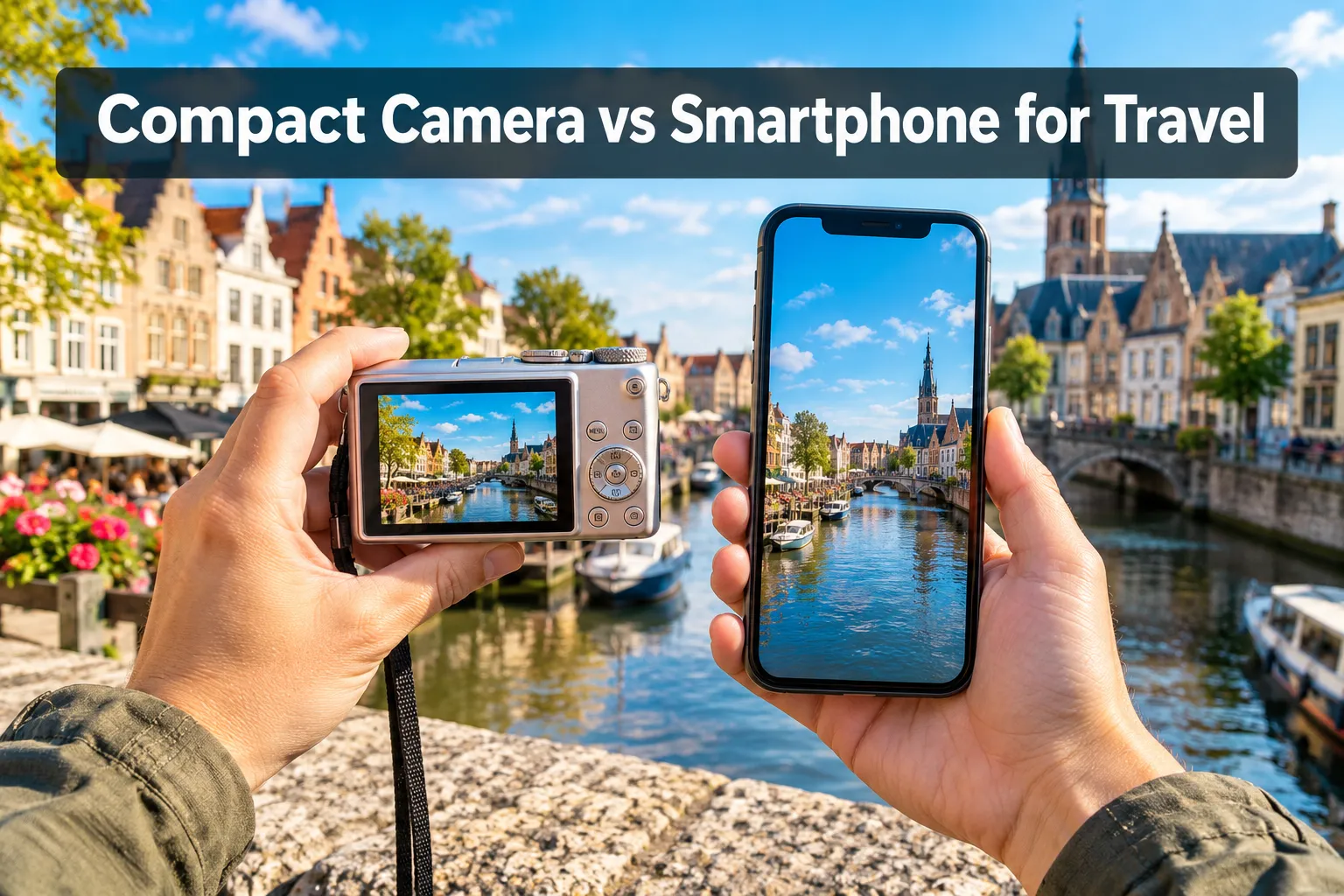
Modern smartphones use computational photography to combine information from multiple exposures and improve the final image. In good lighting, a recent iPhone can produce excellent travel photos without requiring the user to adjust many settings.
A compact camera does not automatically produce a better picture in every situation. Results depend on the camera, lens, lighting, settings, and the person using it. Some larger-sensor compact cameras can provide more natural detail and greater control, while smartphone processing can produce impressive results from a much smaller device.
Zoom is one of the most important differences for my travel photography. Modern smartphones may include several lenses with different focal lengths, but image quality can decline when the phone moves beyond its available optical range and relies more heavily on cropping and digital processing.
That is why I bring my Sony RX100 VII. I use my iPhone for general travel photographs, but I reach for the Sony when I need additional distance or want a closer photograph of wildlife. If I need extreme distance, I use my Nikon COOLPIX P1100 instead.
Where My iPhone Works Best
- General travel photographs
- Cover images and thumbnails
- Quick editing and sharing
- Everyday scenes where convenience matters most
Where My Sony RX100 VII Works Best
- Distant subjects and wildlife close-ups
- Optical zoom without relying heavily on digital cropping
- Dedicated camera controls
- Keeping photography separate from my phone
For my travel photography, the choice is not one device or the other. I bring both because they have different jobs. My iPhone handles most general photographs, while my Sony RX100 VII gives me additional reach when the subject is farther away. Many travelers may be satisfied with only a smartphone, but a compact camera is worth bringing when optical zoom and dedicated controls matter.
Practicality on the Road
Image quality is only part of the decision. When I travel, I also consider battery life, overheating, storage, charging, and how quickly I can reach the right camera.
My iPhone is the easiest choice for general photographs, cover images, and thumbnails. However, I also carry a second iPhone as a backup because a phone can overheat, lose power, or be needed for navigation and communication.
My Sony RX100 VII gives me a separate, dedicated camera that does not use my phone’s battery. It also gives me more optical reach for distant subjects and wildlife. Carrying both requires more charging and equipment management, but each device has a specific purpose in my travel setup.
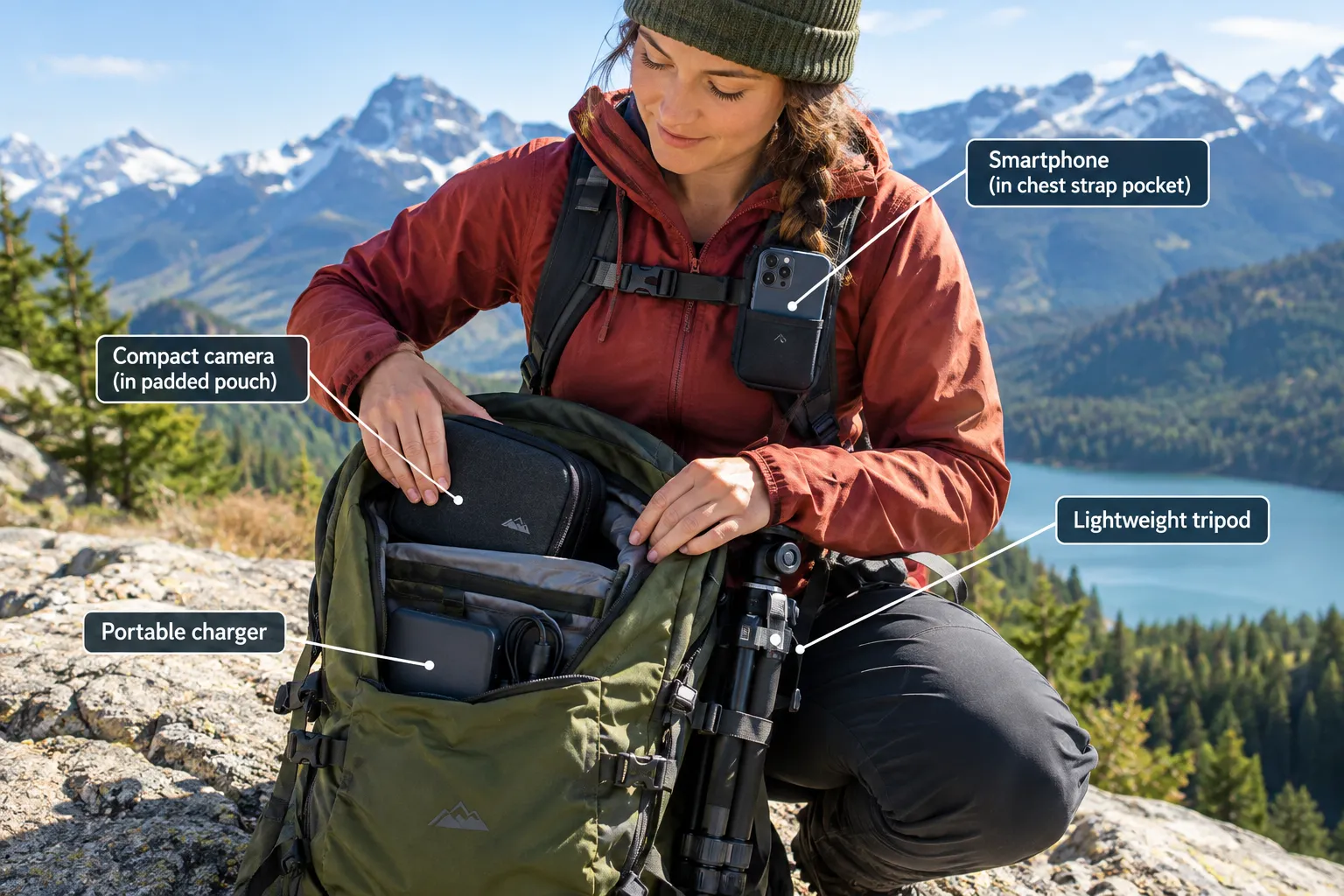
On long travel days, my phone is doing much more than taking pictures. I may also use it for navigation, communication, research, and editing. Heavy use can drain the battery and cause the phone to overheat, which is one reason I bring a second iPhone.
Using my Sony RX100 VII for distant subjects and wildlife also reduces the demand on my primary phone. The Sony uses its own battery and memory card, giving me another way to continue shooting if my phone becomes unavailable.
Managing several devices requires preparation. I charge everything before leaving, carry the batteries and memory cards needed for the day, and make sure I have enough storage available. This is more equipment than most travelers need, but it supports the photography, video, and review work I create during my trips.
Durability, Weight, and Extra Equipment
Durability depends on the specific device. I do not assume that every compact camera is weather-sealed, waterproof, or able to survive a drop. I protect my cameras and phones with appropriate cases or padded storage, especially when traveling outdoors.
A smartphone is the simplest option because it is already in your pocket. Adding a compact camera means carrying another device, battery, charger, and memory card. For some travelers, that extra equipment is unnecessary. For me, the additional reach of the Sony RX100 VII makes the extra equipment worthwhile.
Quick Practicality Comparison
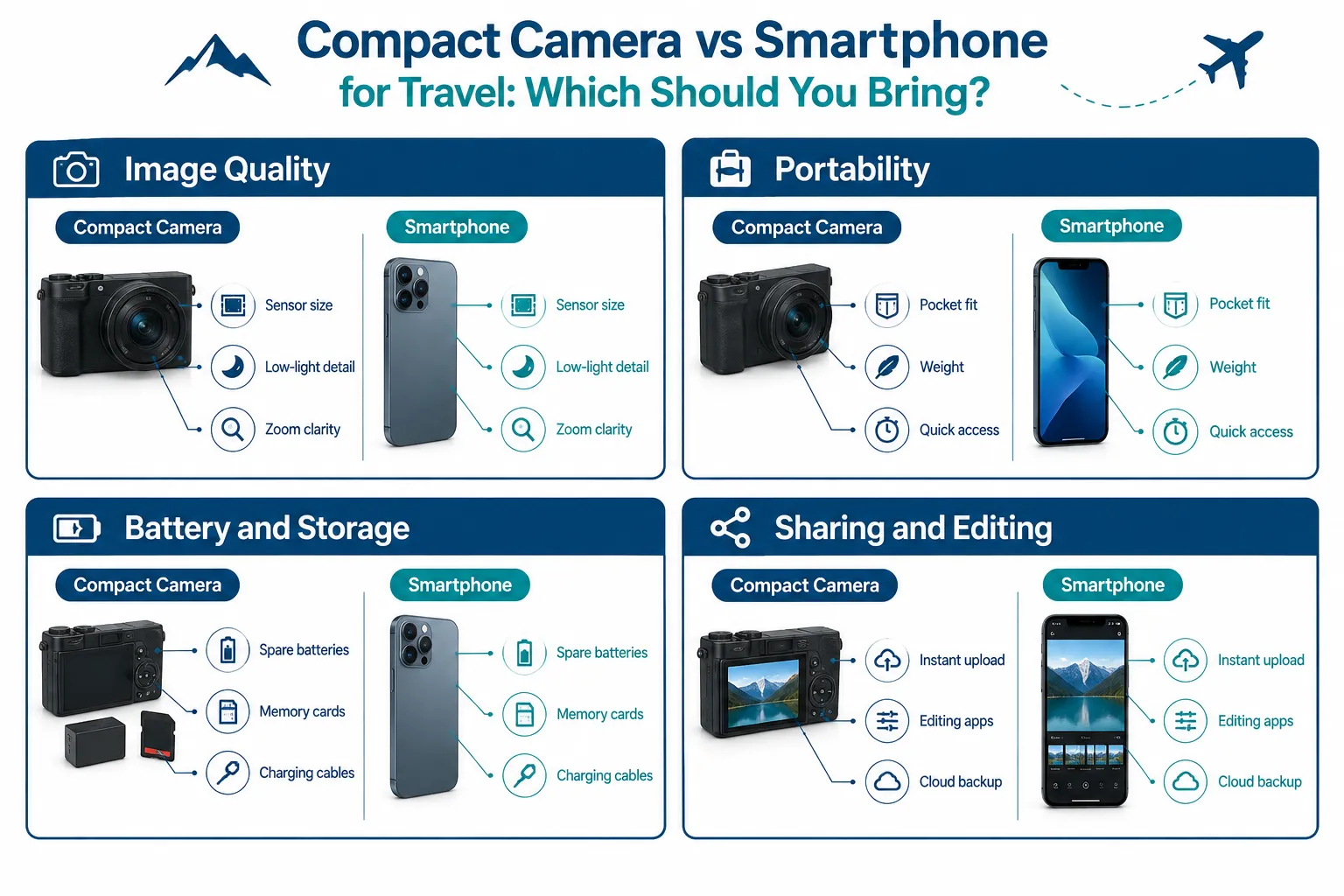
- Convenience: A smartphone is already in your pocket, while a compact camera is another device to carry.
- Zoom: A smartphone depends on its available lenses, while a compact camera provides dedicated optical zoom.
- Battery: A smartphone shares power with navigation, calls, and apps, while a compact camera uses a separate battery.
- Storage: A smartphone uses internal storage, while a compact camera uses removable memory cards.
- Editing and sharing: A smartphone makes these tasks fast and convenient, while camera files usually must be transferred first.
- Best use for me: I use my iPhone for general photos, covers, and thumbnails, and my Sony RX100 VII for distant subjects and wildlife.
Which One Should You Bring?
If you mostly want everyday vacation pictures, quick videos, easy editing, and immediate sharing, your smartphone may be all you need. It keeps your setup simple and eliminates the need to manage another device.
A compact camera makes more sense when optical zoom, dedicated controls, or a separate photography device will improve the way you shoot. It can be especially useful for wildlife, distant landmarks, performances, and other subjects that cannot be approached easily.
Before packing, ask yourself these questions:
- What will I photograph most? General scenes may be easy to handle with a phone, while wildlife and distant subjects may benefit from optical zoom.
- How important is convenience? A phone is already with you, while a camera adds another device to carry and protect.
- Will my phone have other jobs? Navigation, communication, research, and editing all use the same battery and can contribute to overheating.
- How will I use the images? Quick social sharing favors a phone, while a dedicated camera may give you more control over how an image is captured.
- Am I comfortable managing extra gear? A camera may require batteries, memory cards, a charger, and protective storage.
My own answer is to carry both. The iPhone handles the majority of my general travel images, covers, and thumbnails. The Sony RX100 VII comes out when I need more reach. For extreme distance, I may use the Nikon COOLPIX P1100. My other cameras support specific types of photo and video work, but that does not mean every traveler needs the same setup.
You can find more advice in the Travel Photography Tips section, explore individual models in Camera Reviews, or compare options in Camera Comparisons.
Frequently Asked Questions
Is a compact camera still worth bringing when smartphones take such good pictures?
Yes, when it provides something your phone does not provide well enough for your needs. For me, the main advantage is optical reach for distant subjects and wildlife. Travelers who mainly take general pictures may be satisfied with a smartphone alone.
Can I use only a smartphone for a long trip?
Yes. Many travelers can use a smartphone as their only camera. Bring a reliable charging solution, monitor available storage, and remember that navigation, communication, video, and photography all use the same device and battery.
Why do you bring a second iPhone?
I bring a second iPhone as a backup because my primary phone may overheat or lose power during heavy use. The backup gives me another option for photography, communication, and other essential travel tasks.
Why do you use the Sony RX100 VII?
I use the Sony RX100 VII when I need more distance than I normally get from my iPhone, particularly for wildlife close-ups and other faraway subjects. It is also a separate camera with its own battery and memory card.
Why bring the Nikon COOLPIX P1100?
I use the Nikon COOLPIX P1100 for extreme distances. It has a specialized role in my setup and is not the camera I use for every general travel photograph.
Does every traveler need both a phone and a compact camera?
No. Travelers who value simplicity and mainly take everyday pictures may only need a smartphone. Carrying both makes sense when the compact camera has a clear job that justifies the extra weight and equipment.
Final Thoughts
The best travel camera is not automatically a smartphone or a compact camera. It is the device that fits the subject, the trip, and the way you prefer to work.
For me, the iPhone and Sony RX100 VII are complementary tools. The iPhone handles general travel photography, cover images, and thumbnails. The Sony handles distance and wildlife close-ups. A second iPhone provides backup, and my other cameras come along when their specialized capabilities are needed.
You do not need to copy my entire setup. Decide what you expect to photograph, determine whether your phone can handle it, and bring another camera only when it has a clear purpose. That approach keeps your travel kit useful instead of filling it with equipment you may never use.
If you have questions about choosing travel-camera gear, visit the contact page and ask Tony.
Travel Camera Truth — Honest Reviews. Real Testing. Better Decisions.
Founder of Travel Camera Truth and Big T Honest Reviews, sharing honest, practical camera and travel-gear guidance based on real-world use.