

Tony “Big T” is the founder of Travel Camera Truth and Big T Honest Reviews, sharing honest camera and travel-gear advice based on firsthand use and real-world testing.
Last updated: September 22, 2026
The Canon EOS R50 was my first camera, and I used it for over a year on my Las Vegas and national park adventures. A camera professional who helped me develop my website recommended it to me. After spending that time with it, I understand why: I found the R50 enjoyable, easy to use and a great camera to start with.
If you are moving from a smartphone to your first mirrorless camera, that is the perspective I want to share. This guide combines my experience using the R50 with an explanation of its features, lens options and limitations, so you can decide whether it fits the way you want to take photos.
Affiliate disclosure: This article contains affiliate links. If you buy through them, I may earn a commission at no extra cost to you. As an Amazon Associate I earn from qualifying purchases.
Quick Answer
The Canon EOS R50 for beginners is an approachable first mirrorless camera: it is small, has a 24.2MP APS-C sensor, an eye-level viewfinder, a flip-out touchscreen and subject-tracking autofocus. Its main compromises are a small battery, no in-body image stabilization, a limited burst buffer and 4K video capped at 30 fps. Check the current listing before buying, because prices and lens bundles vary.
Key Takeaways
- The R50 is a mirrorless camera: no mirror, so you see a live digital preview of your exposure before you press the shutter button.
- 24.2MP APS-C sensor (about 22.3 × 14.9mm) with DIGIC X processing, shooting 6000 × 4000 stills in JPEG, HEIF, RAW or C-RAW (Canon).
- Autofocus tracks people, animals and vehicles with up to roughly 100% frame coverage with compatible lenses in tracking mode (Canon).
- Full-width 4K/30p video, 10-bit HDR PQ and 15 fps electronic-shutter bursts, says DPReview.
- RTINGS measured a little over one hour of continuous 4K/30p recording per battery.
- APS-C is plenty for travel photography, family shots and social video; full frame mostly buys low-light headroom.
- Old EF DSLR lenses work through Canon's EF-EOS R adapter, including autofocus.
- Skip it if you need 4K/60p, C-Log, or long sports bursts.
What is a mirrorless camera, and how does it differ from a DSLR?
A mirrorless camera has no reflex mirror inside, so light hits the sensor directly and you preview the image electronically. A DSLR (like Canon's older Rebel bodies) bounces light off a mirror into an optical viewfinder, which requires space for the mirror. Many DSLRs also offer an exposure preview when using live view.
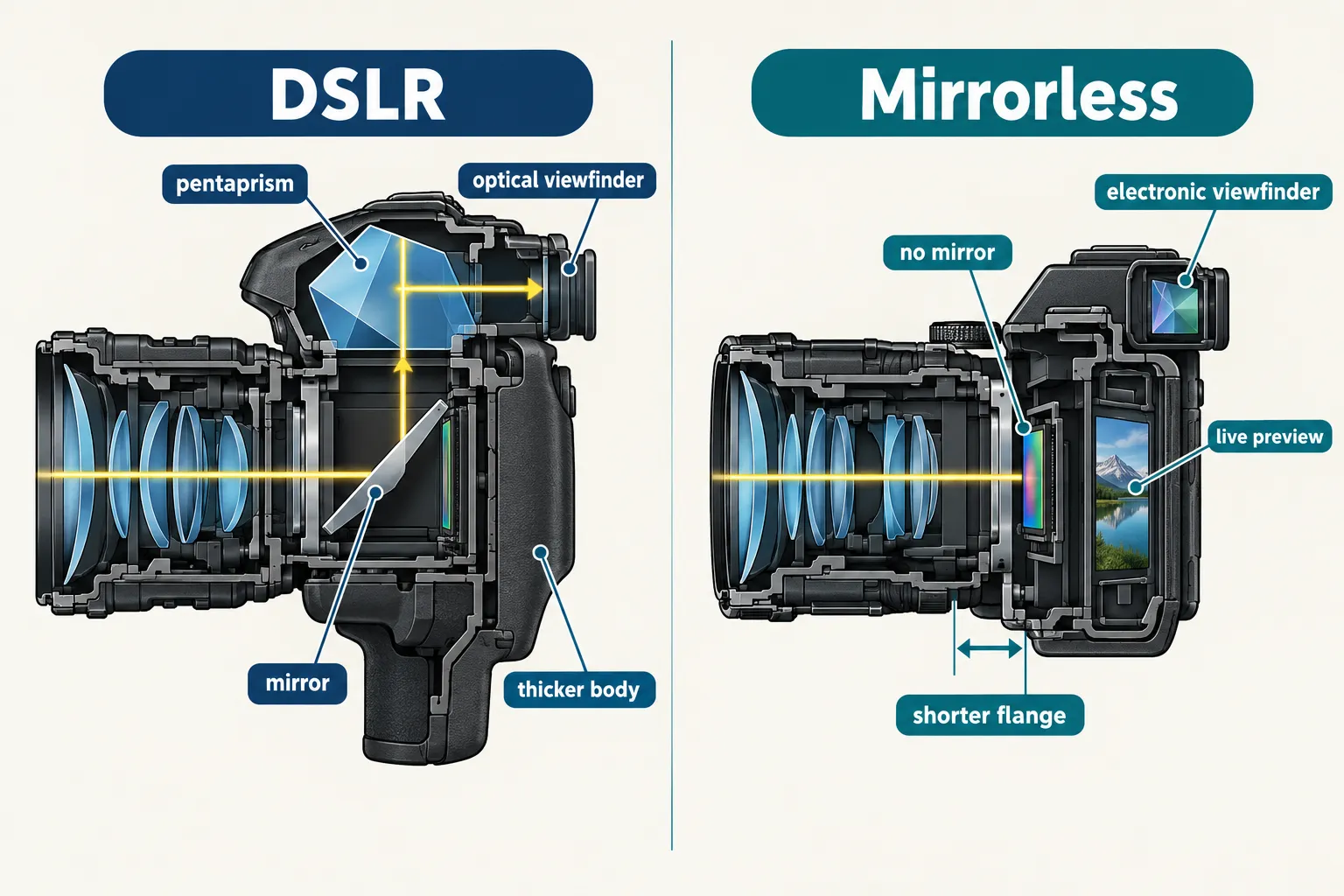
Three practical differences for a beginner:
- You see the result first. Change brightness and the electronic viewfinder or screen updates live. A DSLR optical viewfinder does not show the same live exposure simulation, although its rear-screen live view may do so.
- Autofocus lives on the sensor, so face and eye detection works in stills and video, not just in live view.
- Smaller kit. Less bulk means the camera actually leaves the house, the main reason smartphone users abandon big gear.
Canon still sells DSLR-era knowledge that transfers perfectly: the Canon EOS 90D and the Rebel T8i/850D use the same aperture, shutter speed and exposure logic as the R50.
Is the Canon EOS R50 good for beginners?
Yes—and for me, that recommendation comes from over a year of using it. As my first camera, the Canon EOS R50 felt approachable and enjoyable. Ease of use is one of the biggest reasons I recommend it to other first-time camera buyers.
Its automatic shooting modes, touchscreen and eye-level viewfinder give beginners several ways to get comfortable. You can start with automatic settings and explore more control at your own pace. There is no need to learn every menu before enjoying your camera.
Controls and button functions on your Canon EOS R50
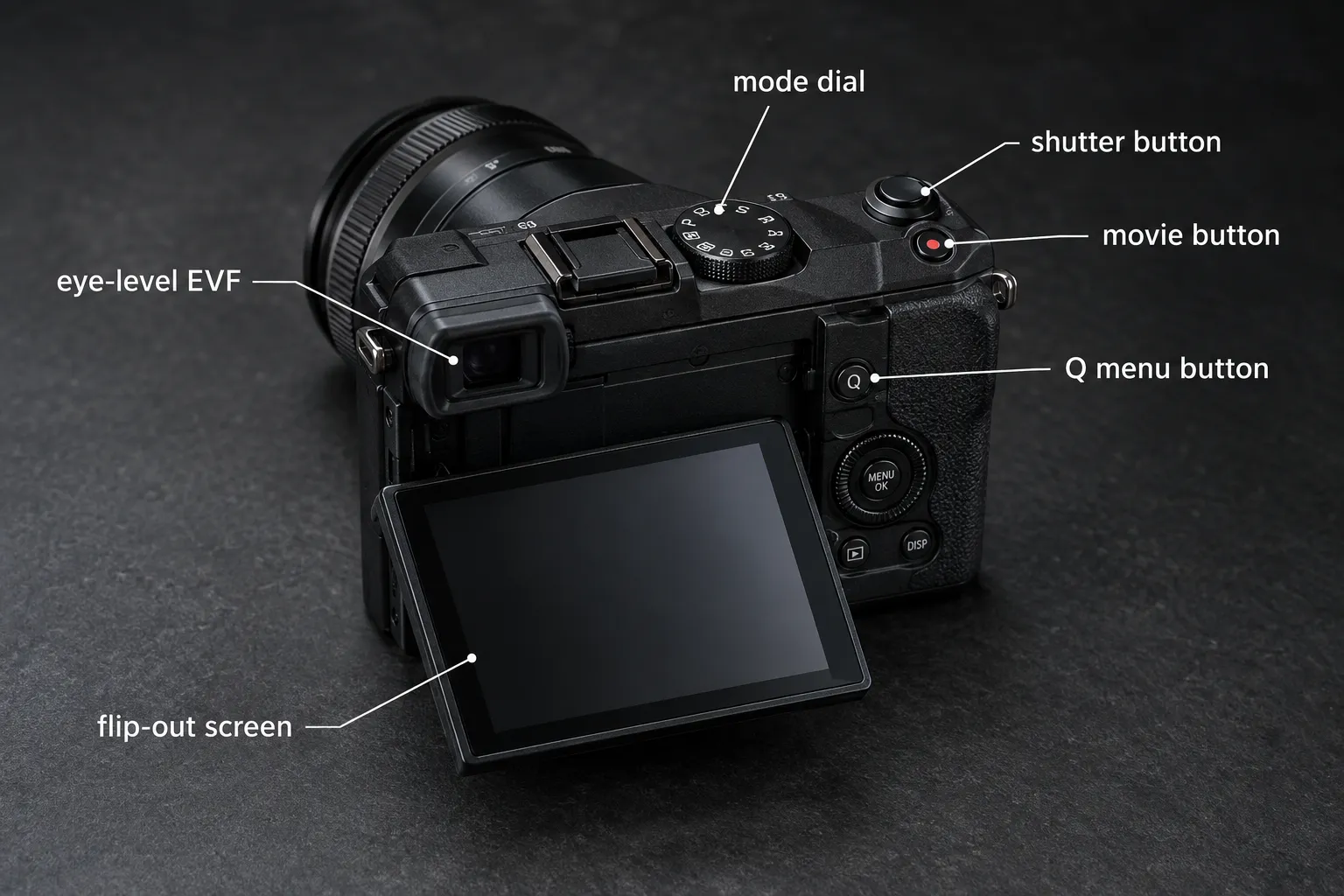
The external controls are deliberately simple: a mode dial, a shutter button with a control dial, a movie button, a Q button that opens a quick settings grid on the touchscreen, a Menu button, and a playback button to view your shots. PCMag notes the small body makes the control cluster a bit crowded, which is the trade-off for compact size.
Shooting modes on the EOS R50
Start in A+ (Scene Intelligent Auto), where the camera picks everything. Then graduate: Av (you pick aperture), Tv (you pick shutter speed), M (you pick both). Hybrid Auto records short clips around still photos and combines them into a digest movie. Drive mode, self-timer and flash sit inside the Q screen.
Watch: Canon R50 beginner walkthrough
Follow a step-by-step introduction to the R50 controls and operation.
Canon EOS R50 price in 2026, where to buy, and is used worth it?
Prices move constantly, and body-only listings are not directly comparable with lens kits. Check the current price, seller, warranty and included lens before ordering. A body-only purchase needs a compatible lens before you can start shooting.
Used vs new: compare the saving with the warranty and return policy. Check the sensor, lens mount, screen, autofocus, card slot and battery condition; shutter count alone does not establish condition or video use. A reputable used dealer with a return window can be a sensible option. Browse our camera reviews and buying guides for more options.
Canon EOS R50 vs Nikon Z30: which is better for beginners?
Choose the R50 if an eye-level viewfinder matters for travel and bright outdoor conditions. The Nikon Z30 has no viewfinder, but its flip-out screen can suit screen-based photography and vlogging. Compare current kit prices and lens options rather than assuming either camera is always cheaper.
| Camera | Sensor | Viewfinder | Max 4K | Best for |
|---|---|---|---|---|
| Canon EOS R50 | 24.2MP APS-C | Yes, EVF | 30p, full width | All-round first camera |
| Nikon Z30 | 20.9MP APS-C | None | 30p | Budget vlogging |
| Canon EOS R10 | 24.2MP APS-C | Yes, EVF | 60p (cropped) | Action and wildlife |
| Canon EOS R8 Mark II | 24.2MP full frame | Yes, EVF | 60p, full width | Step-up, low light |
Do I need a full-frame camera, or is APS-C enough?
APS-C is enough for many beginners, including travelers making prints and sharing photos online. The R50 sensor is about 22.3 × 14.9mm, substantially larger than many smartphone sensors, although the difference depends on the phone. Full frame can offer better low-light image quality and shallower depth of field with comparable framing, but lens choice, technique and total kit cost matter too.
For scale, Canon announced the full-frame EOS R8 Mark II on September 15, 2026, with an estimated body-only price of $1,899 and availability expected in late October (Canon announcement). That is a different budget from a beginner R50 kit. Decision rule: choose full frame when its specific benefits justify the total camera-and-lens cost; APS-C can produce excellent prints and travel photographs.
What lenses work with the Canon EOS R50, and can you use old Canon lenses?
The R50 takes Canon RF and RF-S lenses natively. Older EF and EF-S DSLR lenses work through an EF-EOS R adapter; EF-M lenses are not compatible. Lens choice has expanded since early R50 reviews: Sigma now offers Canon RF-mount APS-C lenses, including bright primes and zooms. Check that you select the Canon RF version.
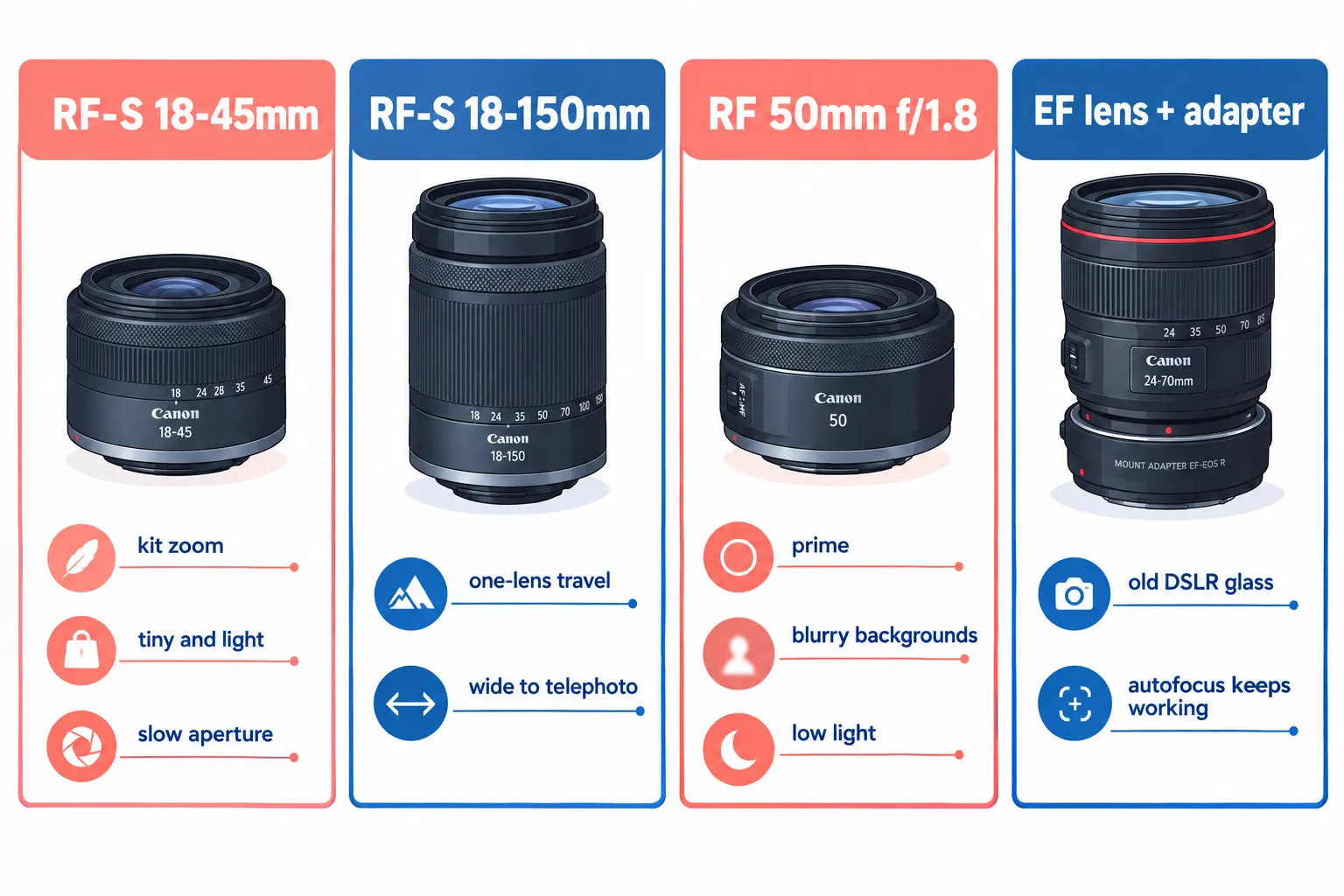
A sane path:
- RF-S 18-45mm kit, tiny, fine in daylight. DPReview calls it soft and slow, so don't blame yourself.
- RF-S 18-150mm, one lens for a whole trip.
- RF 50mm f/1.8: useful for portraits and blurred backgrounds. On the R50 it frames like an 80mm lens on full frame, so it can feel tight in small rooms.
- EF glass you already own, adapt it instead of selling it.
Before buying an upgrade, identify what your kit lens cannot do: fit a wide scene into the frame, reach distant wildlife, or let in enough light indoors. That makes your next lens purchase more useful than following camera-body rumors.
Best settings for Canon EOS R50 beginners
Start in A+ auto mode while learning the controls. When ready, try Av mode with Auto ISO; use eye detection for people and Servo AF for moving subjects. An Auto ISO ceiling such as 6400 is a starting preference, not a rule: raising ISO can be better than accepting motion blur.
- Bright outdoors: Av, f/5.6, ISO 100.
- Indoors / evening: use the widest available aperture and Auto ISO. Try 1/125s or faster for people, increasing shutter speed for movement. A still subject with a stabilized lens may allow slower speeds.
- Kids or pets: Tv mode, 1/500s, continuous drive mode.
- Landscapes: f/8, single-point AF, tripod if light is low, our Mactrem camera tripod review covers a budget option.
Shoot RAW + JPEG if you plan to edit; PCMag and DPReview both note Canon's in-camera JPEG noise reduction is heavy-handed. A short personal settings checklist can be easier to follow than memorizing menus.
Watch: Set up your Canon R50
Use this beginner setup tutorial alongside the settings above. Pause as you work through your own camera menus.
Is the Canon EOS R50 good for video, and how long does the battery last?
It's good for social video, YouTube and travel clips, but not for demanding film work. You get full-width 4K/30p, 10-bit HDR PQ and a front-facing screen (DPReview; PCMag). There's no 4K/60p and no C-Log.
Battery is the weak spot. RTINGS recorded slightly more than one hour of continuous 4K/30p per charge and calls video battery life poor, with noticeable rolling shutter (that wobble when you pan fast). Carry compatible spares. USB charging requires compatible equipment; check the manual rather than assuming any USB-C power bank can run the camera during recording. The R50 also works as a plug-in USB webcam. If you're building a channel, our guide to must-have camera equipment for YouTubers pairs well with it. For hands-free action shots, an action camera like the Insta360 Ace Pro complements rather than replaces it.
For the action-camera option mentioned above: check Insta360 Ace Pro price on Amazon.
Watch: Canon R50 photo and video settings
Andy Feliciotti covers both still-photo and video settings. This player starts at the video-settings chapter (10:45).
Canon EOS R50 autofocus problems and fixes
Most "autofocus problems" on the R50 are settings issues, not faults. Canon specifies Dual Pixel CMOS AF with face, eye and subject detection for people, animals and vehicles, up to about 100% horizontal × 100% vertical coverage, with up to 651 still AF zones (Canon).
Common causes and fixes:
- Focus hunting in dim rooms → open the aperture, add light, or switch to one-shot AF on a contrasty edge.
- Wrong subject in focus → turn on Subject to Detect (People/Animals/Vehicles) and enable Eye Detection.
- Sharp screen, blurry file → check shutter speed. A starting point for camera shake is about 1/(1.6 × focal length) on the R50, but subject movement may require a much faster speed. Review the actual image at full size.
- Adapted EF lens feels sluggish → performance depends on the lens motor, light and focus settings. Canon EF lenses use in-lens motors; they are not driven by a camera-body screw drive.
- Nothing locks at all → check autofocus mode, lens and adapter seating, and whether you are closer than the lens can focus. Consult Canon support if the issue persists.
Travel photography, accessories, and the starter kit you actually need
I used my R50 on Las Vegas and national park adventures for over a year. Those trips are the foundation of my recommendation. I found it easy to use and enjoyable to take along, which matters when you are buying your first camera for the places you actually want to visit.
My experience does not mean everyone needs the same setup. Think about what you want to photograph and how much gear you want to carry. The R50 offers a small body with room to grow through different lenses, but a large zoom still adds size to your bag. Keep your phone handy for quick sharing, maps and moments when you want the simplest option.
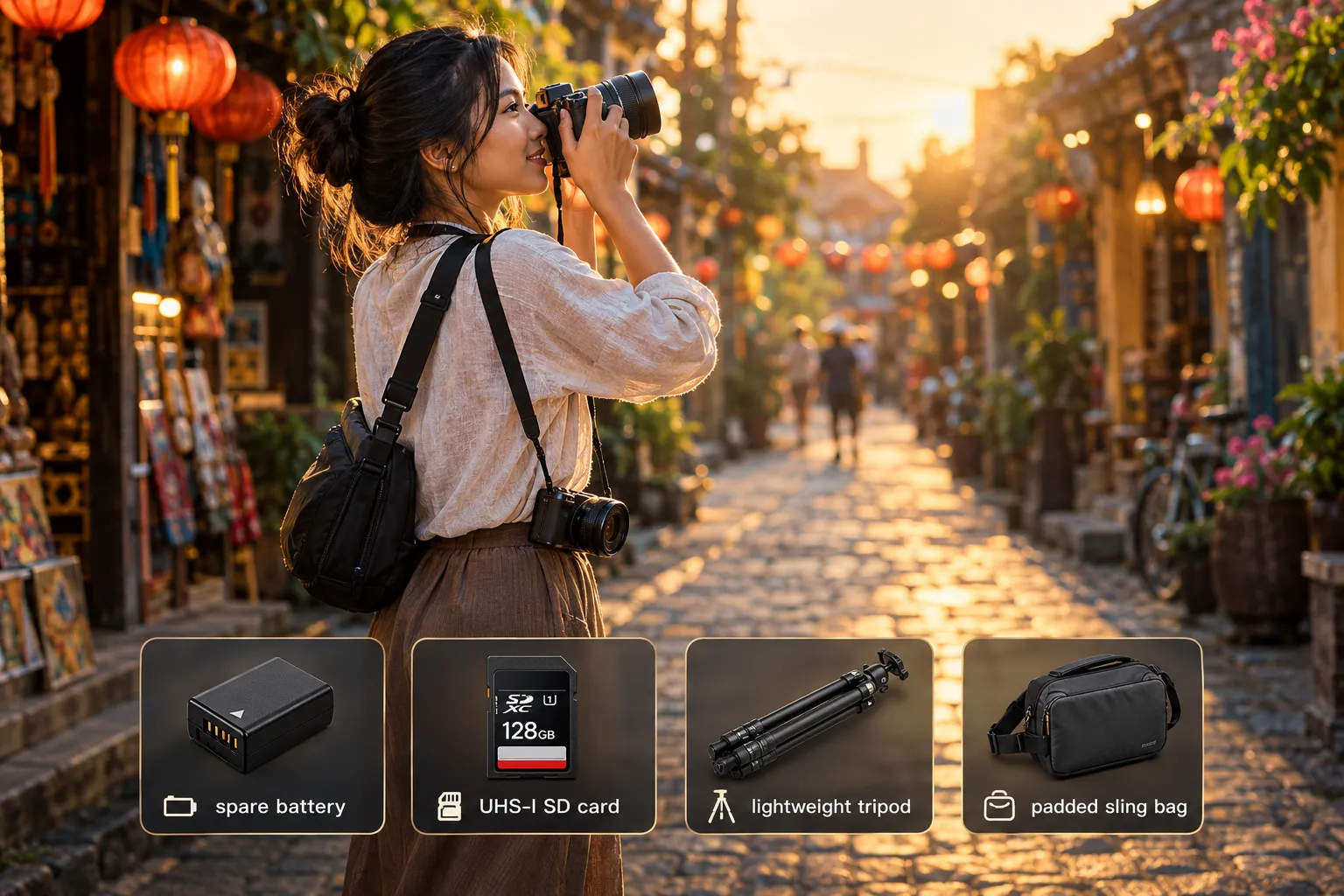
Your starter kit, in priority order:
- At least one compatible spare battery; consider more for long video days.
- A 64-128GB UHS-I SD card, V30 or faster.
- A padded sling bag.
- A lightweight tripod, see the Mactrem tripod hands-on review.
- A screen cloth and a spare USB-C cable.
Skip filters, cages and gimbals until you've shot 1,000 frames. For a wider look at compact options, see our 2025 best travel cameras review.
Honest pros and cons: where the Canon EOS R50 for beginners falls short
The R50 is excellent value, but it isn't a pro tool. Here's the balanced view from published reviews.
Pros: 24.2MP APS-C image quality; trustworthy subject-tracking autofocus; both an EVF and a flip-out screen; 15 fps electronic bursts; Wi-Fi, Bluetooth and webcam use; genuinely small.
Cons: small burst buffer; no 4K/60p or C-Log; rolling shutter; heavy JPEG noise reduction; short battery life; lens cost and compatibility to consider; crowded controls (DPReview; PCMag; Focal and Frame; RTINGS).
Stabilization limitation: the R50 has no in-body image stabilization. A stabilized lens helps with camera shake; digital movie stabilization crops the image. Neither freezes a moving subject.
Learn the camera first, then buy a lens that solves a problem you actually encounter. A more expensive body does not automatically make a better photograph.
Where to explore more Canon EOS R50 for beginners guides
Start with the free Canon EOS R50 Advanced User Guide for accurate menu names, controls and troubleshooting. Keep it bookmarked on your phone while learning. Older DSLR guides can explain aperture, shutter speed and ISO, but their button layouts and menu instructions may differ from the R50.
Frequently asked questions
Is the EOS R50 a good beginner camera?
Yes. It pairs a 24.2MP APS-C sensor with beginner-friendly auto modes, a flip-out touchscreen and reliable subject-tracking autofocus, and RTINGS still recommends it as a lower-budget pick for its portability and intuitive interface. The main compromises are short battery life and the need to budget for suitable lenses.
Which Canon EOS is best for beginners?
The Canon EOS R50 is the best starting point for most people because of its size, price and simple interface. Step up to the EOS R10 if you shoot sports or wildlife and want deeper buffers and 4K/60p. Only consider full frame, like the EOS R8 Mark II, once lenses and low-light work justify the cost.
Is the Canon R50 still a good camera in 2026?
Yes, the R50 remains worth considering if you want a compact camera for photos and 4K/30p clips. Judge it against your needs and current kit prices. Check Canon support for firmware information rather than choosing a camera solely by its release year.
What is the Canon EOS R50 good for?
Travel photography, family and pet photos, street shooting, portraits with a fast prime, social video, and webcam duty over USB. It records full-width 4K/30p and 10-bit HDR PQ video. It's less suited to long sports bursts, professional log grading, or all-day video shoots without spare batteries.
Is there a Canon EOS R50 For Dummies PDF free download?
Legitimate free downloads are limited to publisher samples and the free online cheat sheet; the full book is a paid title. Canon does publish the complete instruction manual free on its support page, which is the most accurate reference for menus, button functions and specifications.
What are the best Canon R50 settings for photos?
Start with A+ auto, then try Av with Auto ISO as you learn. Use eye detection for portraits and Servo AF for movement. Watch shutter speed: 1/125s can be a useful starting point for people, while moving children or pets may need 1/500s or faster. Shoot RAW + JPEG if you want editing flexibility.
Conclusion: who should buy it, and who shouldn't
Would I recommend the Canon EOS R50 to another first-time camera user? Yes. It was my first camera, recommended by a camera professional who helped me develop my website. After using it for over a year on Las Vegas and national park adventures, I can say I found it enjoyable, easy to use and a great place to begin.
If you want to move beyond a smartphone and explore interchangeable lenses, the R50 deserves a place on your shortlist. My recommendation is based on the experience of starting with this camera and enjoying it over time. Consider the limitations below alongside that personal experience before deciding.
Look elsewhere if you need 4K/60p, advanced log video or long action bursts. The EOS R10 offers cropped 4K/60p and stronger action capabilities, but does not provide Canon Log. Check the exact video features of any alternative. Action-first creators may prefer a dedicated model; compare the Insta360 X3 vs X4.
Next steps: check the Canon EOS R50 listing on Amazon, confirm the lens package, and budget for a memory card and spare battery. Start with automatic shooting, then learn one setting at a time.
Considering a separate 360 camera? View the Insta360 X3 or Insta360 X4 Standard Bundle listings. These serve a different purpose from an interchangeable-lens camera.
I hope this guide and the videos included here help you feel more comfortable choosing your first camera. The R50 gave me an enjoyable start, and I am happy to recommend it to other first-time users looking for an easy-to-use mirrorless camera.
References
- Canon EOS R50 Advanced User Guide
- Canon EOS R50 specifications and support
- Canon EOS R10 specifications and support
- Canon EOS R8 Mark II announcement
- Sigma Canon RF-mount lens lineup
Meta title: Canon EOS R50 for Beginners: A Great First Mirrorless
Meta description: The Canon EOS R50 was my first camera. After over a year of Las Vegas and national park adventures, here’s why I recommend it to beginners.
Tags: Canon EOS R50, Canon EOS R50 for beginners, mirrorless cameras, beginner photography, APS-C sensor, RF-S lenses, travel photography, Canon vs Nikon, camera buying guide, 4K video cameras, Canon R50 settings, first camera upgrade
Tony “Big T” is the founder of Travel Camera Truth and Big T Honest Reviews, sharing honest camera and travel-gear advice based on firsthand use and real-world testing.