

Tony “Big T” is the founder of Travel Camera Truth and Big T Honest Reviews, sharing honest camera and travel-gear advice based on firsthand use and real-world testing.
Affiliate disclosure: As an Amazon Associate I earn from qualifying purchases.
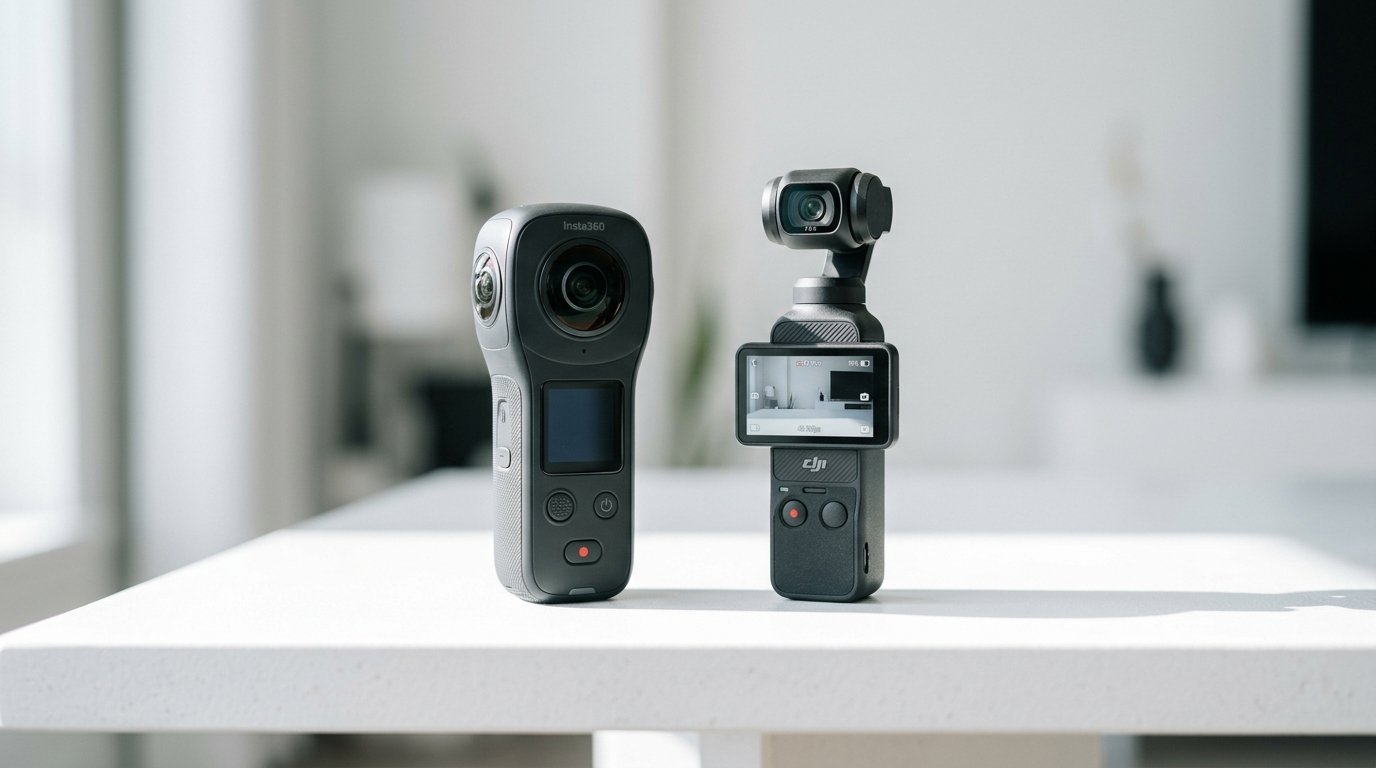
If you are comparing the Insta360 Luna Ultra vs DJI Osmo Pocket 3, the biggest difference is not simply 8K versus 4K. It is flexibility versus simplicity. After using and testing both cameras, I found that the Luna Ultra gives serious creators more shooting options, while the Pocket 3 remains the easier camera to carry, learn, and use every day.
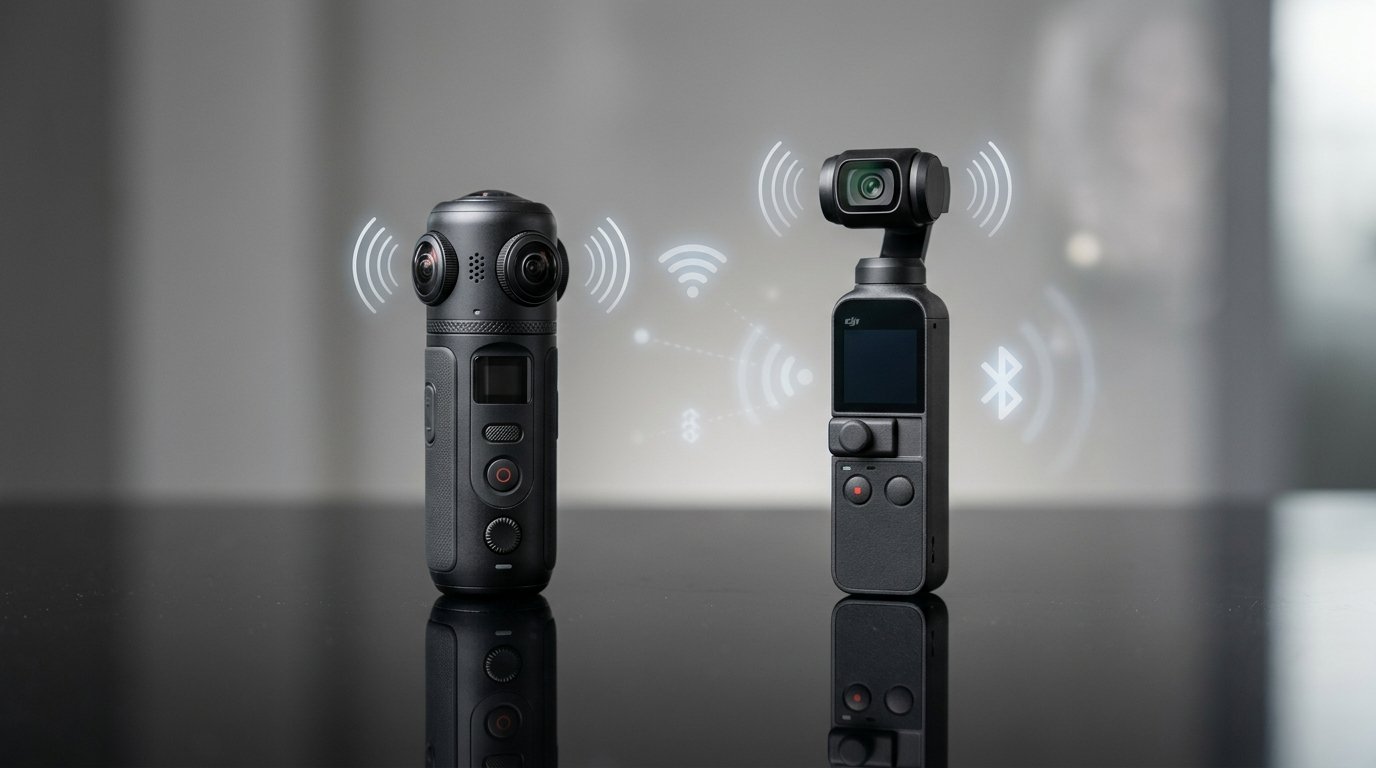
The Insta360 Luna Ultra is the more ambitious system. It combines a Leica 1-inch main camera, a separate telephoto camera, 8K recording, a detachable wireless screen, internal storage, and advanced tracking. The DJI Osmo Pocket 3 is smaller and lighter, with proven three-axis stabilization, a rotating screen, strong 4K video, and a mature DJI microphone ecosystem.
My quick recommendation: Choose the Luna Ultra if you want maximum creative control, telephoto reach, 8K cropping room, and a remote screen. Choose the Pocket 3 if portability, speed, value, and a simple point-and-shoot workflow matter more.
Check the Insta360 Luna Ultra price on Amazon (paid link)
Check the DJI Osmo Pocket 3 price on Amazon (paid link)
Insta360 Luna Ultra vs DJI Osmo Pocket 3: Quick Verdict
The Luna Ultra is the overall feature winner. Its dual-camera design, 8K recording, 60mm-equivalent telephoto view, detachable OLED screen, internal storage, and longer manufacturer-rated battery life make it the more versatile production tool.
The Pocket 3 is the better choice for most casual vloggers and travelers. It is 54 grams lighter, costs less in most configurations, starts quickly, and delivers excellent stabilized footage without demanding a complicated setup.
Here is the simplest way to decide:
- Buy the Luna Ultra for filmmaking, reframing, remote monitoring, telephoto shots, larger storage capacity, and more room to grow.
- Buy the Pocket 3 for walking videos, family travel, quick social content, discreet street shooting, and the easiest everyday workflow.
- Keep the Pocket 3 if you already own it unless you specifically need the Luna Ultra’s telephoto camera, detachable screen, 8K, or expanded tracking tools.
At-a-Glance Comparison
| Feature | Insta360 Luna Ultra | DJI Osmo Pocket 3 | Advantage |
|---|---|---|---|
| Main sensor | 1-inch 8K sensor | 1-inch CMOS | Luna Ultra for resolution |
| Main lens | Leica Summicron, 20mm equivalent, f/1.8 | 20mm equivalent, f/2.0 | Luna Ultra |
| Second camera | 60mm equivalent telephoto, f/2.0 | None | Luna Ultra |
| Maximum standard video | 8K/30fps | 4K/60fps | Luna Ultra |
| Slow motion | 4K/120fps; 1080p/240fps | 4K/120fps; 1080p/240fps | Tie |
| Stabilization | Three-axis mechanical gimbal | Three-axis mechanical gimbal | Tie |
| Subject tracking | Deep Track 5.0 | ActiveTrack 6.0 | Depends on workflow |
| Screen | Detachable 2-inch OLED touchscreen | Built-in 2-inch rotating touchscreen | Luna for remote use; DJI for simplicity |
| Weight | 233g in Cosmic Black | 179g | Pocket 3 |
| Internal storage | 47GB | None | Luna Ultra |
| Memory-card support | Up to 2TB microSD | Up to 1TB microSD | Luna Ultra |
| Rated operating time | Up to 240 minutes | Up to 166 minutes | Luna Ultra |
| Best for | Advanced creators and filmmakers | Travel, vlogging, and everyday carry | Depends on user |
Battery figures are manufacturer laboratory ratings measured at 1080p/24fps under controlled settings. Real-world 4K or 8K recording time will be shorter.
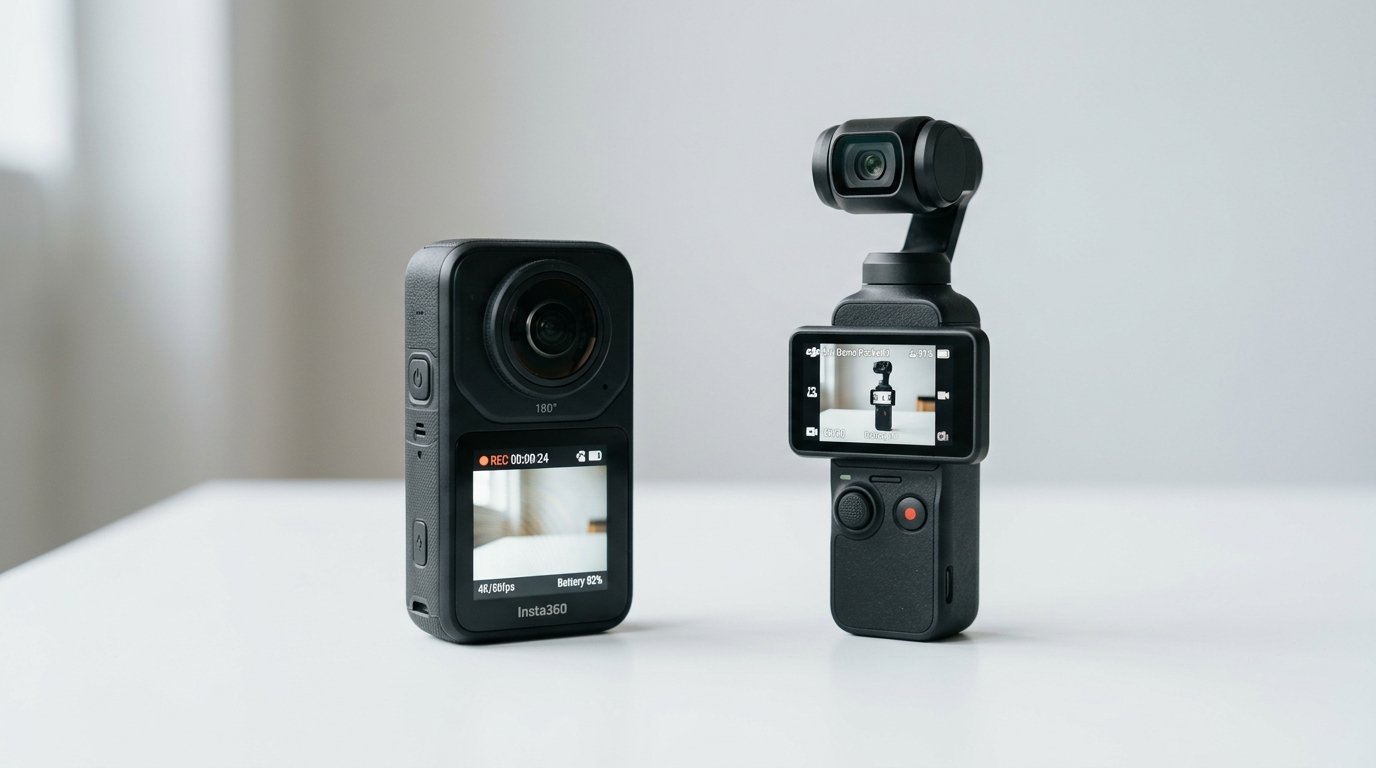
Image Quality and Video Resolution
Both cameras use a 1-inch-class main sensor, but they approach image creation differently.
The Luna Ultra’s main camera pairs a 1-inch 8K sensor with a Leica Summicron lens. The lens has a 20mm-equivalent field of view and an f/1.8 aperture. It can record up to 8K/30fps, 4K/120fps, and 1080p/240fps. Insta360 also includes 10-bit I-Log for creators who want more flexibility when color grading.
The Pocket 3 uses a 1-inch CMOS sensor with a 20mm-equivalent f/2.0 lens. Standard recording reaches 4K/60fps, while its slow-motion mode supports 4K/120fps and 1080p/240fps. DJI includes 10-bit D-Log M and HLG color options, which are useful for matching footage and protecting color information in more demanding edits.
In my testing, the practical difference depended on how I planned to use the footage:
- The Luna Ultra’s 8K files gave me more room to crop, reframe, and deliver multiple compositions from one shot.
- The Pocket 3 produced polished 4K footage with smaller files and a faster editing workflow.
- Both cameras handled daylight scenes well.
- In difficult lighting, correct exposure and camera movement mattered more than the resolution number alone.
Do not buy the Luna Ultra only because “8K” sounds better. Buy it if you will actually crop, stabilize, reframe, or archive higher-resolution footage. For quick 4K publishing, the Pocket 3 remains highly capable.
Watch the video-quality comparison on YouTube
The Luna Ultra’s Telephoto Camera Is a Real Advantage
The Luna Ultra has something the Pocket 3 does not: a second camera with a 60mm-equivalent telephoto lens. It supports up to 12x zoom, including up to 6x lossless zoom in supported modes.
That extra focal length changes what the camera can do. A wide 20mm view works well for walk-and-talk videos, landscapes, and handheld vlogging, but it can make distant subjects look tiny. The Luna Ultra’s telephoto view is more useful for:
- Wildlife and distant details
- Tighter portraits
- Stage performances and events
- Compressed landscape compositions
- Product details and B-roll
- Shots where moving physically closer is not possible
The Pocket 3 relies on its single wide lens and digital cropping. That is fine for typical vlogging, but it cannot reproduce the perspective or subject separation of a true telephoto camera.
For travel creators who want one small system to capture both wide establishing shots and tighter detail shots, the Luna Ultra has the more useful lens package.
Stabilization and Walking Footage
Both cameras use a three-axis mechanical gimbal, and both can produce smooth footage while walking. This is one reason pocket gimbal cameras remain appealing even as phone stabilization improves.
The Pocket 3 feels especially natural for fast, spontaneous recording. Its light weight makes it easy to hold at arm’s length, and the gimbal reacts predictably during normal walking shots, pans, and reveals.
The Luna Ultra is heavier, but its gimbal remained effective in my testing. The extra weight can actually make slow, deliberate moves feel controlled, although it becomes more noticeable during longer handheld sessions.
Neither camera eliminates every bounce. For the smoothest results:
- Bend your knees slightly while walking.
- Keep the camera close to your body.
- Avoid abrupt direction changes.
- Use a wider view when the ground is uneven.
- Slow down before turns instead of forcing the gimbal to catch up.
If your priority is the lightest and easiest walking camera, the Pocket 3 wins. If you want stabilized footage plus the Luna Ultra’s added lens and monitoring options, the extra weight may be worth it.
Tracking: Deep Track 5.0 vs ActiveTrack 6.0
The Luna Ultra uses Deep Track 5.0, with features that include Auto Tracking, Active Zoom Tracking, Group Tracking, and Smart Framing. The system can follow a subject while changing composition, and the telephoto camera creates more options for tighter tracking shots.
The Pocket 3 uses ActiveTrack 6.0. It is a proven, straightforward system for keeping a presenter centered during walk-and-talk videos, demonstrations, and solo filming.
In real use, the better system depends on what you need:
- Pocket 3: easier for a single creator who wants dependable face and subject tracking with minimal setup.
- Luna Ultra: more flexible for group shots, changing focal lengths, advanced framing, and remote operation.
The Luna Ultra has the broader toolset. The Pocket 3 has the simpler learning curve.
Watch the stabilization and tracking comparison on YouTube
Screen and Remote Monitoring
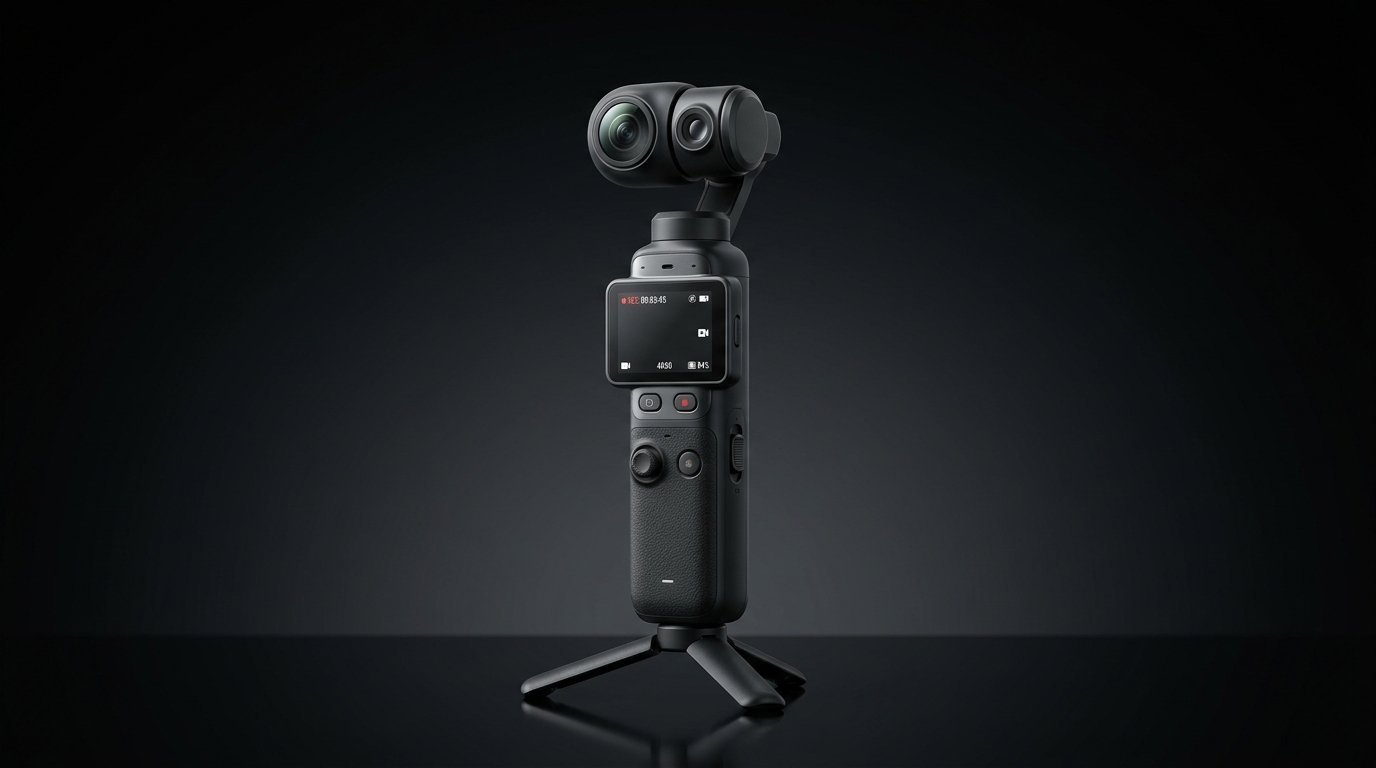
The Pocket 3 has a built-in 2-inch rotating touchscreen. Rotating the display can quickly switch the camera orientation, and the screen is always attached and ready. That design is fast, compact, and difficult to lose.
The Luna Ultra uses a detachable 2-inch OLED touchscreen. Once removed, it can act as a wireless monitor and controller from up to 20 meters away under ideal conditions.
That detachable screen is one of the Luna Ultra’s most important advantages. It helps when:
- The camera is mounted across a room
- You are filming yourself without standing next to the camera
- The camera is positioned low, high, or in a difficult location
- You need to confirm framing before recording
- You want to control the camera without disturbing the shot
There is a tradeoff: a removable part adds another item to charge, protect, and keep track of. The Pocket 3 wins for simplicity. The Luna Ultra wins for remote production.
Portability and Everyday Carry
The DJI Osmo Pocket 3 weighs 179 grams. The Cosmic Black Luna Ultra weighs 233 grams, making the Pocket 3 about 54 grams lighter.
That difference sounds small on paper, but it is noticeable when the camera is held at arm’s length or carried all day. The Pocket 3 also has a very established accessory ecosystem, so compact cases, filters, handles, and mounts are easy to find.
The Luna Ultra is still portable, but it behaves more like a miniature production system than a pure pocket camera. Its second lens and detachable screen add capability, while also adding size and complexity.
My portability verdict:
- Pocket 3: better for a jacket pocket, sightseeing, family trips, and daily carry.
- Luna Ultra: better when the camera is the purpose of the trip and creative flexibility matters more than minimum weight.
Battery Life, Charging, and Storage
Insta360 rates the Luna Ultra for up to 240 minutes of recording at 1080p/24fps under laboratory conditions. DJI rates the Pocket 3 for up to 166 minutes at 1080p/24fps with Wi-Fi and the screen turned off.
Those numbers are useful for comparison, but they are not promises for demanding recording modes. Higher resolutions, high frame rates, tracking, wireless features, screen brightness, and cold weather all reduce battery life.
The Luna Ultra also has a major storage advantage:
- Luna Ultra: 47GB of built-in storage plus microSD support up to 2TB
- Pocket 3: no built-in storage and microSD support up to 1TB
Internal storage is more valuable than it may seem. If I forget a card or fill one unexpectedly, the Luna Ultra can still record. With the Pocket 3, a compatible microSD card is required.
The Pocket 3 counters with fast charging. DJI states that it can reach 80% in about 16 minutes and 100% in about 32 minutes when used with a compatible DJI 65W PD charger.
For maximum recording capacity and emergency backup storage, the Luna Ultra wins. For a quick recharge during a break, the Pocket 3 is excellent.
Audio and Wireless Microphones
Good audio matters more than an extra resolution badge if viewers cannot clearly hear the person speaking.
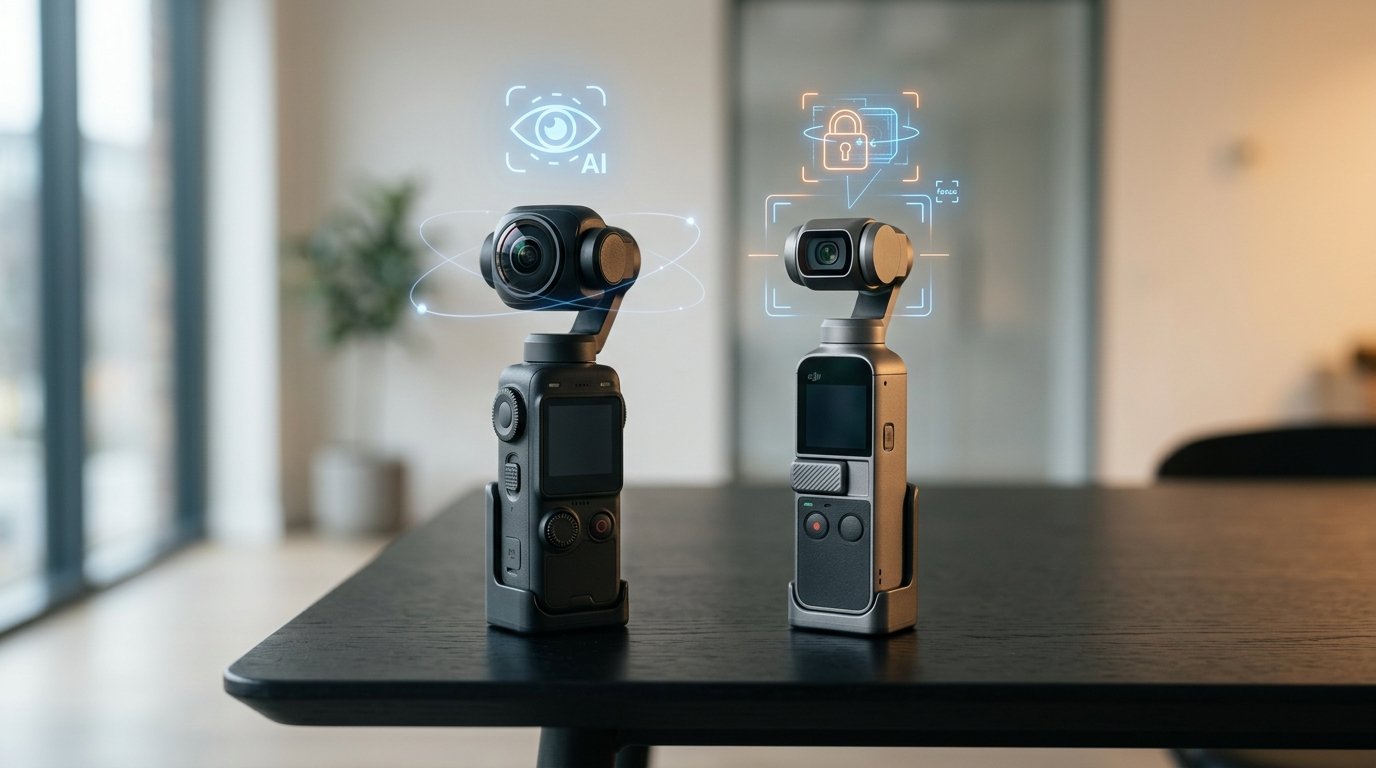
The Luna Ultra can connect directly to as many as two Insta360 Mic Air or Mic Pro transmitters. Two-transmitter support is useful for interviews and two-person presentations.
The Pocket 3 supports DJI Mic 2 and DJI Mic Mini transmitters. DJI’s microphone workflow is familiar, fast, and especially appealing to creators who already own compatible DJI audio equipment.
For a new buyer, both systems can deliver a clean wireless setup. For someone already invested in one brand’s microphones, staying within that ecosystem may be the smarter and less expensive choice.
Low-Light Performance
Both cameras benefit from their 1-inch main sensors, but low-light results still depend on shutter speed, exposure, movement, and processing.
The Luna Ultra has an f/1.8 main lens and includes a 4K/60fps PureVideo mode designed for low-light recording. The Pocket 3 has an f/2.0 lens and has earned a strong reputation for compact-camera night footage.
In my testing, I would not choose between them using low light alone. The Luna Ultra offers more specialized tools and a slightly brighter main lens. The Pocket 3 makes it easy to get an attractive result quickly. When light becomes very dim, both cameras benefit from slower movement and a small portable light.
Workflow, Color, and Editing
Advanced creators will appreciate the Luna Ultra’s 10-bit I-Log recording, built-in timecode, and stated compatibility with Final Cut Pro and Adobe Premiere Pro workflows. These features make more sense when the camera is used alongside other production equipment.
The Pocket 3 offers 10-bit D-Log M and HLG, and DJI footage is widely supported by common editing applications. Its smaller 4K files can also be easier to manage on a laptop or phone.
The tradeoff is straightforward:
- Luna Ultra: more production flexibility and higher-resolution source files
- Pocket 3: faster storage, transfer, and editing for routine 4K projects
Before choosing 8K, confirm that your computer, storage, and backup workflow can handle the larger files. A feature has little value if it slows every project to a crawl.
Watch the creator-workflow comparison on YouTube
Price and Overall Value
The Pocket 3 is generally the more affordable choice, although the final cost depends on the bundle, microphone, battery handle, filters, and other accessories.
The Luna Ultra costs more because it includes hardware the Pocket 3 does not have: a telephoto camera, detachable OLED screen, internal storage, 8K recording, and a larger maximum memory-card capacity.
The correct value question is not, “Which camera is cheaper?” It is, “Which features will I actually use?”
The Luna Ultra can be the better value if it replaces multiple devices or prevents you from carrying a second camera. The Pocket 3 can be the better value if you mainly publish 4K video and want a reliable camera that stays with you.
Insta360 Luna Ultra Pros and Cons
Pros
- 8K/30fps recording
- 4K/120fps and 1080p/240fps slow motion
- Leica 20mm-equivalent f/1.8 main lens
- Separate 60mm-equivalent telephoto camera
- Detachable wireless OLED screen
- Deep Track 5.0 with group and zoom-tracking options
- 47GB internal storage
- MicroSD support up to 2TB
- Longer manufacturer-rated battery life
- 10-bit I-Log and built-in timecode
Cons
- Heavier than the Pocket 3
- More expensive
- More controls and options to learn
- 8K files require more storage and processing power
- Detachable screen is another component to manage
DJI Osmo Pocket 3 Pros and Cons
Pros
- Small, light, and easy to carry
- Excellent three-axis gimbal stabilization
- Strong 4K video and 4K/120fps slow motion
- Simple rotating touchscreen
- ActiveTrack 6.0 is easy for solo creators
- Fast charging
- Mature DJI microphone and accessory ecosystem
- Faster, lighter editing workflow than 8K
- Usually costs less than the Luna Ultra
Cons
- No 8K recording
- No dedicated telephoto camera
- No built-in storage
- Screen does not detach for wireless monitoring
- Lower maximum microSD capacity
- Shorter manufacturer-rated runtime
Final Verdict: Which Camera Wins?
In the Insta360 Luna Ultra vs DJI Osmo Pocket 3 comparison, the Luna Ultra wins on features and creative range. Its telephoto camera, 8K recording, detachable monitor, internal storage, and advanced production tools give it capabilities the Pocket 3 cannot match.
However, the Pocket 3 remains the better purchase for many people. It is lighter, simpler, less expensive, and extremely effective for stabilized 4K travel videos, family memories, social content, and everyday vlogging.
My final recommendation:
- Best overall capabilities: Insta360 Luna Ultra
- Best for most travelers and casual vloggers: DJI Osmo Pocket 3
- Best for advanced solo production: Insta360 Luna Ultra
- Best for portability and simplicity: DJI Osmo Pocket 3
- Best reason to upgrade from a Pocket 3: You need telephoto reach, 8K reframing, remote monitoring, or internal storage
Check the Insta360 Luna Ultra price on Amazon (paid link)
Check the DJI Osmo Pocket 3 price on Amazon (paid link)
Frequently Asked Questions
Is the Insta360 Luna Ultra better than the DJI Osmo Pocket 3?
The Luna Ultra is better for creators who need 8K recording, a dedicated telephoto camera, a detachable remote screen, internal storage, and more advanced tracking options. The Pocket 3 is better for buyers who prioritize portability, simplicity, and value.
Does the Insta360 Luna Ultra record 8K video?
Yes. The Luna Ultra can record up to 8K at 30 frames per second with its main camera.
Can both cameras record 4K at 120fps?
Yes. Both the Insta360 Luna Ultra and DJI Osmo Pocket 3 support 4K/120fps slow-motion recording. Both also support 1080p/240fps.
Which camera is better for low-light video?
Both have 1-inch main sensors and can produce strong low-light footage for their size. The Luna Ultra has an f/1.8 main lens and a dedicated PureVideo mode, while the Pocket 3 offers a simple, proven low-light workflow. Technique and exposure settings will strongly affect the result.
Which camera has better subject tracking?
The Luna Ultra’s Deep Track 5.0 offers more tracking modes, including group and active zoom tracking. The Pocket 3’s ActiveTrack 6.0 is simpler and works well for solo presenters. The better choice depends on whether you want flexibility or ease of use.
Does the DJI Osmo Pocket 3 have internal storage?
No. The Pocket 3 requires a compatible microSD card. The Luna Ultra includes 47GB of internal storage and also accepts microSD cards.
Which camera is better for travel?
The Pocket 3 is better for light, discreet everyday travel because it weighs 179 grams. The Luna Ultra is better for a photography-focused trip where telephoto reach, remote monitoring, and maximum image flexibility justify carrying a slightly heavier camera.
Which camera has better battery life?
Insta360 rates the Luna Ultra for up to 240 minutes at 1080p/24fps. DJI rates the Pocket 3 for up to 166 minutes under its own 1080p/24fps test conditions. Actual recording time will be shorter at higher resolutions and frame rates.
Can I connect a wireless microphone?
Yes. The Luna Ultra can connect directly to up to two compatible Insta360 Mic Air or Mic Pro transmitters. The Pocket 3 works with compatible DJI Mic 2 and DJI Mic Mini transmitters.
Is the Luna Ultra worth upgrading to from the Pocket 3?
It is worth considering if you need a telephoto camera, 8K cropping room, a detachable wireless monitor, internal storage, or more advanced tracking. If the Pocket 3 already meets your 4K vlogging and travel needs, upgrading is not essential.
Official Specifications and Sources
Tony “Big T” is the founder of Travel Camera Truth and Big T Honest Reviews, sharing honest camera and travel-gear advice based on firsthand use and real-world testing.